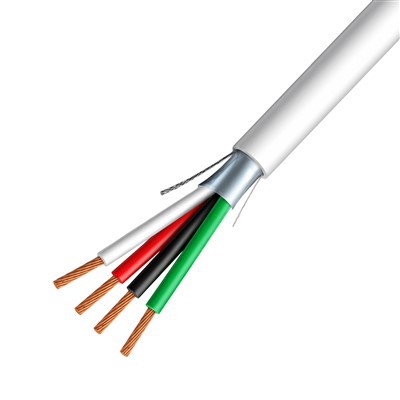
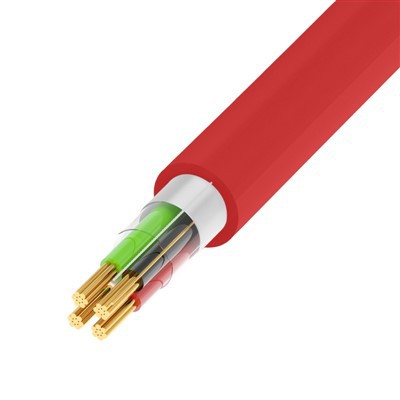
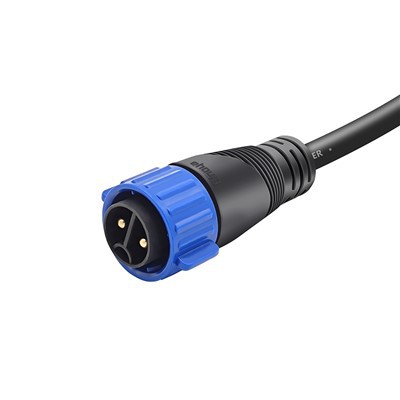
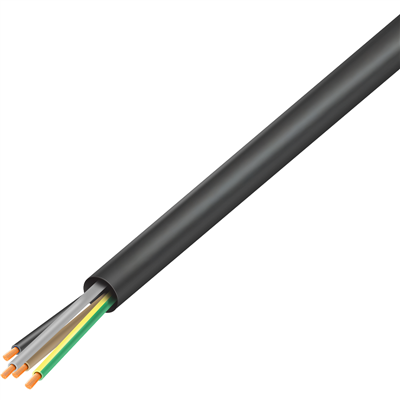
Wires consist of one or more flexible conductors covered in a light, soft sheath; cables consist of one or more insulated conductors, covered in a tough outer layer of metal or rubber. Both cables and wires generally consist of three components: a core wire, an insulating sheath, and a protective outer sheath. Common cable characteristics are as follows: CEF-EPR rubber insulation, chloroprene rubber sheath, marine flame-retardant power cable. CVV-PVC insulation, PVC sheath, marine flame-retardant power cable. Oxygen chamber wiring often uses the BV, BX, RV, and RVV series cables. BV-Copper core PVC insulated wire, with a long-term operating temperature of 65°C and a minimum temperature of -15°C, and an operating voltage of 500V AC and 1000V DC. It can be installed indoors or outdoors in fixed locations, either exposed or concealed. BX-Copper core rubber insulated wire, with a maximum operating temperature of 65°C, and can be installed indoors. RV – PVC insulated single-core flexible wire, with a maximum operating temperature of 65°C and a minimum operating temperature of -15°C, operating voltage of 250V AC and 500V DC, used for internal wiring of instruments and equipment.
RVV – Copper-core PVC insulated and sheathed flexible wire, with a permissible long-term operating temperature of 105°C and an operating voltage of 500V AC and 1000V DC, used in humid environments, requiring high mechanical protection, and subject to frequent movement and flexing. In fact, there's no strict distinction between "wire" and "cable." Products with a small number of cores, small diameter, and simple structure are generally referred to as wires. Uninsulated wires are called bare wires, while others are called cables. Conductors with larger cross-sectional areas (greater than 6 square millimeters) are called large wires, while those with smaller cross-sectional areas (less than or equal to 6 square millimeters) are called small wires. Insulated wires are also called cloth wires. This is simpler and easier to understand! Cables generally have two or more layers of insulation, are mostly multi-core, and are wound on cable reels. Lengths are generally greater than 100 meters. Wires are generally single-insulated, single-core, and come in 100-meter reels, without reels.
Common cable models: VV stands for polyvinyl chloride insulation (the first V), polyvinyl chloride sheath (the second V); YJV22 stands for cross-linked polyethylene insulation (YJ), polyvinyl chloride sheath (V), steel tape enclosure (22). Models with "ZR" or "FR" are flame-retardant cables (wires). Models with "L" are aluminum wires. Wire models are relatively simple: BVV - polyvinyl chloride insulated and sheathed copper core wire, BV - polyvinyl chloride insulated copper core wire, BYJ - copper core cross-linked polyolefin insulated wire, BVR - polyvinyl chloride insulated copper core flexible wire, BX - rubber insulated copper core wire, RHF - neoprene sheathed copper core flexible wire.