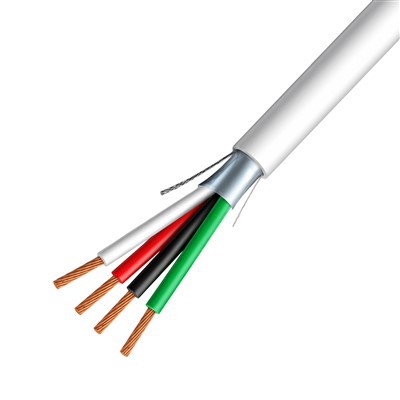
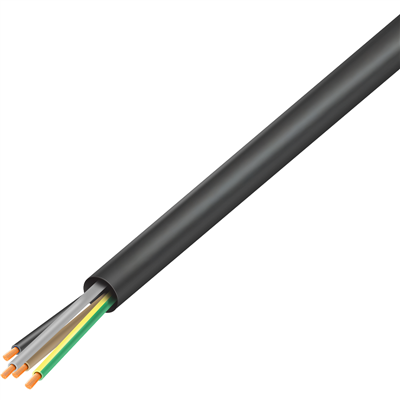
As the most fundamental physical connection medium in computer networks, network cables play an irreplaceable role in data transmission and network construction. Despite the increasing popularity of wireless technology, network cables remain the preferred connection method in many critical network scenarios due to their stability, high speed, and reliability.
First, network cables are the key carrier for high-speed data transmission between devices. Whether in a home local area network (LAN) or an enterprise network, network cables, through standardized connectors (such as RJ-45) and protocols (such as Ethernet), provide a stable and low-latency data transmission channel. For example, Category 6 or Category 7 network cables support Gigabit or even 10GbE networks, meeting the needs of high-definition video streaming, online gaming, and large file transfers. In contrast, wireless networks are susceptible to interference, while network cables ensure more stable connection quality.
Second, network cables serve as the backbone transmission in network architectures. In high-density network environments such as data centers and computer rooms, network cables connect servers, switches, and routers through structured cabling systems, forming an efficient data exchange network. The combination of fiber optic and copper network cables ensures bandwidth requirements for long-distance transmission while reducing overall deployment costs. Furthermore, the physical connection characteristics of network cables offer security advantages, reducing the risk of wireless signals being eavesdropped or interfered with.
Finally, the compatibility and standardization of network cables make them a universal network infrastructure worldwide. From the early days of Cat5 to today's Cat8, network cable technology has continuously evolved to meet the ever-increasing demand for network speeds. Furthermore, the plug-and-play nature of network cables simplifies network deployment and maintenance, lowering the technical barrier to entry.
In summary, despite the rapid development of wireless technology, network cables, due to their high speed, stability, and security, still hold a core position in modern network communications. In the future, as network demands continue to increase, network cable technology will continue to be optimized, providing a solid physical foundation for digital transformation.