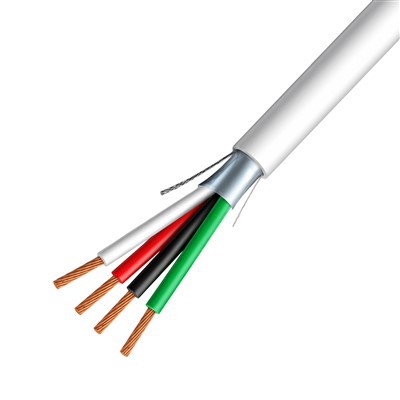
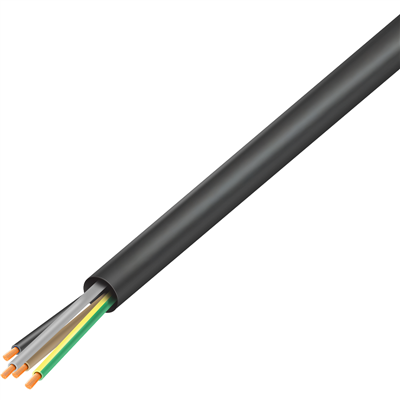
As the physical foundation of modern network communications, network cables carry the core function of data transmission. Essentially, they reliably transmit digital signals from one device to another via metal conductors or optical fibers, forming the fundamental connecting link in computer networks.
In terms of functionality, network cables play three key roles. The first is data transmission. Differential signaling technology (such as the twisted pair design in twisted-pair cables) effectively resists electromagnetic interference and ensures stable transmission of binary data over copper cables. Fiber optic cables utilize the principle of total internal reflection of light to achieve higher bandwidth data transmission.
The second is network topology construction. Whether it's a home LAN or a data center backbone network, network cables are the fundamental physical medium for forming star or bus network structures. The third is power supply support. Some network cables that meet the PoE (Power over Ethernet) standard can simultaneously transmit power and data, providing integrated solutions for devices such as IP phones and wireless access points. From a technical perspective, common network cables include CAT5e, CAT6, and CAT7, with differences reflected in transmission speeds (ranging from 1Gbps to 10Gbps), bandwidth (100MHz to 600MHz), and interference resistance. They utilize a four-pair twisted-pair design with standardized RJ45 connectors to ensure inter-device compatibility.
It is important to note that network cable performance directly impacts network quality. Poor-quality cables can lead to packet loss and increased latency, so strict adherence to cabling standards, such as TIA/EIA-568, is crucial for critical network deployments. While technological advancements are driving network cables toward higher bandwidth, enhanced interference resistance, and longer transmission distances, their core role as the fundamental carrier of the network's physical layer remains unchanged.