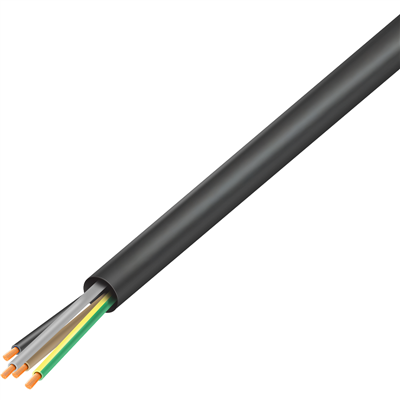
As one of the most fundamental transmission media in computer networks, network cables play an indispensable role in today's digital age. They physically connect various network devices, providing a stable and reliable channel for data transmission and a crucial infrastructure for building local and wide area networks (WANs).
From a technical perspective, network cables are primarily categorized into three types: twisted pair, coaxial cable, and fiber optic cable. Twisted pair is the most common network connection solution due to its low cost and ease of installation. According to international standards, twisted pair cables are further categorized into Category 5, Category 5e, Category 6, and Category 7, each with significant differences in transmission speed, bandwidth, and interference resistance. For example, Category 5e (Cat5e) supports 1 Gbps transmission speeds, while Category 6 (Cat6) offers up to 10 Gbps.
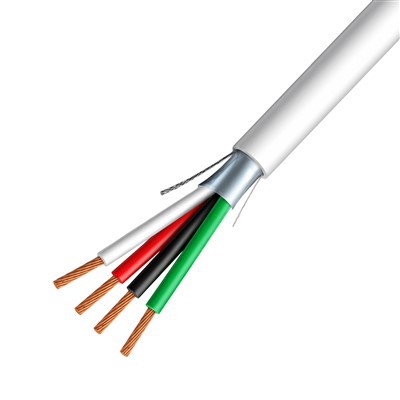
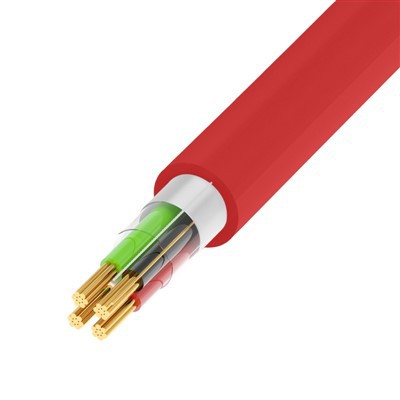
The structural design of network cables embodies sophisticated engineering. A typical twisted pair cable consists of four pairs of copper conductors twisted together. This special twisting method effectively reduces electromagnetic interference and ensures signal integrity. Cables are typically coated with PVC or LSZH fire-resistant material to protect the internal conductors and meet fire safety requirements. In connection applications, the crimping quality of the RJ45 connector and the network cable directly impacts network performance. Standard termination processes minimize contact resistance.
With the continuous advancement of network technology, network cable standards are also evolving. The newly released Category 8 network cable supports ultra-high-speed transmission of 40Gbps, meeting the needs of high-density network environments such as data centers. It is important to note that in actual deployments, factors such as cable length, wiring method, and environmental interference can all affect the final network performance. Professional network engineers typically perform certification testing using cable testers to ensure that each link meets the relevant standards.
As the invisible arteries of the information age, network cables are unobtrusive but crucial. From home broadband to enterprise data centers, from smart buildings to the Industrial Internet of Things, these seemingly simple cables carry data between billions of devices worldwide, continuously driving the progress and development of digital civilization.