As fundamental components in electronic systems, connectors undertake the core functions of current and signal transmission and mechanical fastening. Their performance directly impacts the reliability and stability of devices. From consumer electronics to industrial automation, from communication base stations to spacecraft, connectors are ubiquitous and serve as the "nerve nodes" of complex electronic networks.
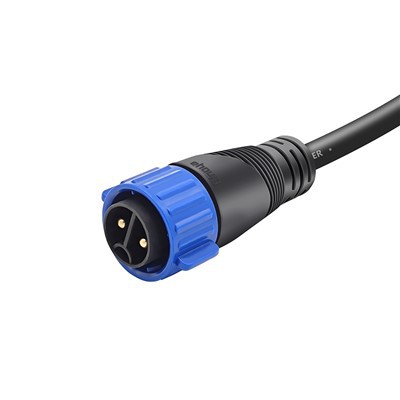
Connectors come in a wide variety of types. They can be categorized by application, including board-to-board, wire-to-board, power, and RF connectors; and by transmission medium, they can be divided into electrical, fiber optic, and fluid connectors. For example, the most common USB connector enables fast data exchange and charging between devices through a standardized interface. High-speed connectors like HDMI and PCIe support 4K video transmission or multi-channel data processing, meeting the high-bandwidth demands of modern computing and display. In the industrial sector, heavy-duty connectors that withstand high temperatures and vibrations are widely used in harsh environments such as robotics and rail transit, ensuring long-term, stable system operation.
Advances in materials science and manufacturing processes continue to drive breakthroughs in connector performance. For example, phosphor bronze contacts with gold plating reduce contact resistance and improve wear resistance, while high-performance plastic housings offer flame retardancy and electromagnetic shielding properties. The trend toward miniaturization is also significant-the pitch of board-to-board connectors in smartphones has shrunk to 0.35mm, yet they still need to guarantee a lifespan of thousands of plug-in and unplug cycles. Furthermore, intelligent connectors are beginning to integrate sensors to monitor parameters like temperature and current in real time, providing data support for predictive maintenance.
In the future, with the development of 5G, the Internet of Things, and new energy vehicles, connectors will face challenges with higher frequencies, higher currents, and more complex protocols. High-frequency and high-speed signal integrity, low-power design, and modular compatibility will become key R&D priorities. While often overlooked as the "invisible bridge" of electronic systems, connectors are an indispensable foundation for technological advancements. Their innovation will continue to empower the digital future of the Internet of Everything.