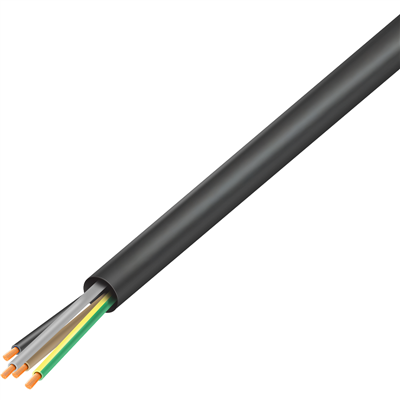
As the core carrier for power and signal transmission, the performance of cables depends largely on the materials used. Different cable materials vary significantly in terms of conductivity, temperature resistance, mechanical strength, and corrosion resistance, making them suitable for different applications.
Copper and aluminum are the most common cable conductor materials. Copper has excellent conductivity (approximately 59 MS/m), mechanical strength, and corrosion resistance, making it widely used in power transmission, communications, and precision equipment. Although copper is more expensive, its low electrical resistance reduces energy loss, making it suitable for high-load and long-distance transmission. In contrast, aluminum has lower conductivity (approximately 37 MS/m), but its low density and low cost make it widely used in overhead transmission lines and low-voltage distribution systems. However, aluminum is susceptible to oxidation, requiring special treatment at joints to prevent poor contact.
Insulation material also affects cable performance. Polyvinyl chloride (PVC) insulation is low-cost and flexible, making it suitable for general household and commercial power wiring, but its high-temperature resistance is poor (long-term operating temperatures generally do not exceed 70°C). Cross-linked polyethylene (XLPE) offers higher heat resistance (up to 90°C or higher) and strong aging resistance, making it commonly used in industrial and high-voltage cables. Rubber insulation, due to its excellent flexibility and weather resistance, is often used in mobile devices and harsh environments.
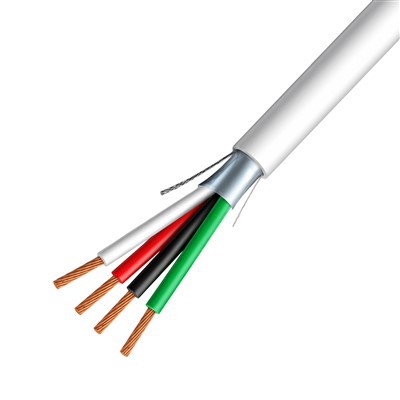
In addition, shielding materials such as tinned copper braid or aluminum foil are used to reduce electromagnetic interference (EMI) and are commonly used in high-frequency signal transmission cables. Sheathing materials such as low-smoke zero-halogen (LSZH) flame-retardant materials are preferred in locations with high safety requirements, such as subways and data centers.
In summary, cable material selection requires a comprehensive consideration of conductivity, cost, environmental compatibility, and safety requirements to ensure stable and efficient system operation.