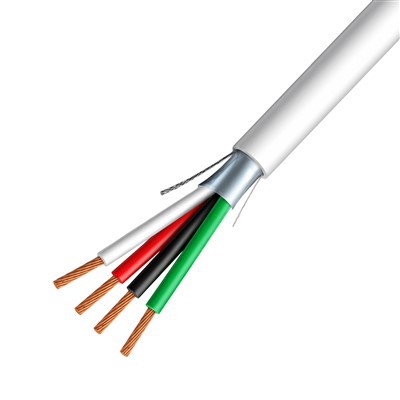
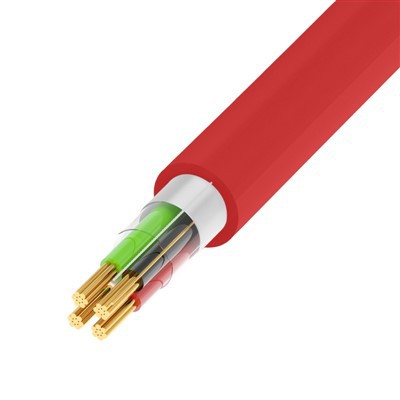
The conductor cross-sectional area is a core parameter of wires and cables and a critical factor affecting their electrical performance. However, in the assessment of the nominal cross-sectional area of conductors in power cords for electrical appliances, some users and testing laboratories hold misunderstandings in interpretation and implementation. They adopt the geometric method to measure the actual cross-sectional area of conductors and compare the readings against the nominal cross-sectional area specified in standards for compliance judgment, which has caused obstacles to the compliance of relevant products.
Previously, Quality and Certification published an article titled Interpretation and Analysis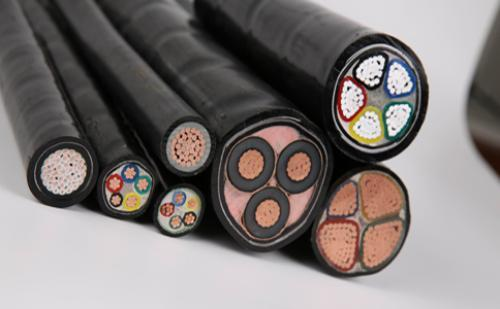 on the "Nominal Cross-sectional Area" of Cable Conductors, elaborating on the definition, comprehension and assessment rules of cable conductor cross-sectional area in detail.
Given the potential impact of this issue on product testing and certification within the IECEE global multilateral mutual recognition system, IECEE issued a new CTL Resolution PDSH 2219 in 2023 to unify and standardize the interpretation and implementation of relevant assessment requirements among testing laboratories and certification bodies worldwide applying IEC standards under the IECEE framework, with clear provisions specified for the assessment of the nominal cross-sectional area of conductors in power cords.
1. Requirements Stipulated in the Resolution
Question
For household and similar electrical appliances tested and certified under the IECEE-CB scheme in accordance with IEC 60335-1:
Is physical measurement required for the nominal cross-sectional area of conductors in power cords complying with IEC 60227 or IEC 60245? Or may compliance be verified by inspecting cord markings as well as relevant test reports and certificates?
If physical measurement is mandatory, what measurement method shall be adopted? Shall the actual cross-sectional dimension be measured, or shall the nominal cross-sectional area be determined by measuring conductor resistance in accordance with IEC 60228?
Resolution
For power cords complying with IEC 60227 or IEC 60245, physical measurement of the nominal conductor cross-sectional area is not required. Compliance with the nominal cross-sectional area specified in Clause 25.8 may be verified by checking cord markings and corresponding certificates or test reports.
2. Interpretation of the CTL Resolution
CTL Resolution PDSH 2219 clarifies that for IECEE-CB testing and certification of household and similar electrical appliances based on IEC 60335-1 (the corresponding national standard in China is GB 4706.1), the nominal cross-sectional area of conductors in power cords shall be verified via markings, test reports and certificates, rather than geometric measurement of the actual conductor cross-sectional area.
The technical rationale is summarized as follows:
IEC 60335-1 specifies requirements for the nominal cross-sectional area of conductors instead of the actual cross-sectional area. Therefore, the assessment target is the nominal value rather than the physical dimension.
IEC 60335-1 does not specify any test method for measuring the nominal conductor cross-sectional area. In general standard application practice, a dedicated test method shall be provided if an item is subject to physical measurement.
The list of test equipment specified in IEC 60335-1 does not include instruments for measuring conductor cross-sectional area, which further indicates that such measurement is not required under this standard.
Relevant wire and cable standards (e.g. IEC 60227 and IEC 60245) assess conductors by testing conductor resistance instead of measuring actual cross-sectional area. Conductor resistance is a key parameter directly correlated with the rated current of cables in practical service.
Conductor resistance is affected by both cross-sectional area and material properties (e.g. copper purity). Accordingly, judging the compliance with rated current merely by actual cross-sectional area is unreasonable.
Conclusion
In IECEE-CB testing and certification against IEC 60335-1, physical measurement (especially geometric measurement of actual cross-sectional area) of the nominal cross-sectional area of power cord conductors is unnecessary. Verification shall be conducted by examining cord markings, test reports and certificates.
The issuance and implementation of this resolution will help laboratories and certification bodies within the IECEE system standardize the assessment rules for the nominal cross-sectional area of power cord conductors. It also guides cable manufacturers, end users, third-party institutions and other stakeholders to correctly understand and apply standard provisions on conductor cross-sectional area and resistance, facilitating quality compliance and performance improvement of products across the industrial chain.
3. Introduction to IECEE
IECEE
Full name: IEC System for Conformity Assessment Schemes for Electrotechnical Equipment and Components. It is a multilateral certification system based on IEC international standards. Member parties mutually recognize test results to obtain national certifications or market approvals worldwide.
IECEE CTL
The Committee of Testing Laboratories (CTL) is a functional body under IECEE. It aims to ensure consistent test results across all CB testing laboratories, promote mutual recognition of CB certificates and reports, and strengthen cooperation among testing facilities.
IECEE-CB Scheme
The IECEE-CB Scheme is a global mutual recognition system for test certificates of electrotechnical products operated by IECEE. Its core objective is to align national standards with IEC standards and enhance cooperation among certification bodies, so as to realize the ideal of "one test, global acceptance" and boost international trade.
More than 70 National Certification Bodies (NCBs) from over 50 member economies have signed multilateral agreements under the CB Scheme. Applicants may use CB test certificates and reports issued by one NCB to apply for national certification or market access in other member economies of the CB Scheme.
All tests under the CB Scheme are performed in accordance with IEC standards. Where the standards of target countries/regions have not been fully harmonized with IEC standards, relevant national deviations declared by the destination shall also be taken into account during testing.