Description
Contact Us


Product Description
|
Product Standards |
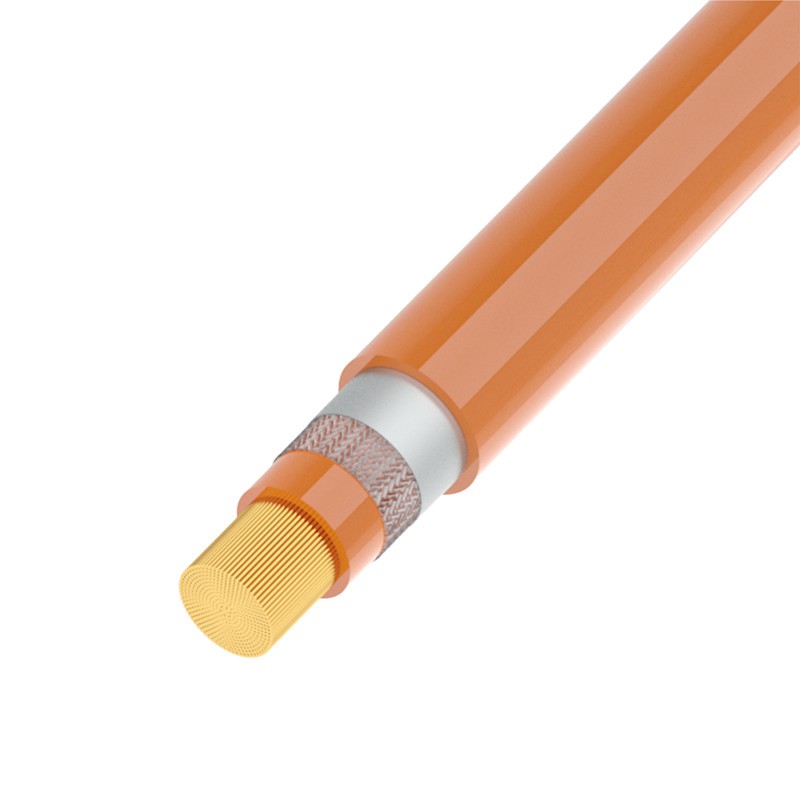
product structure |
Rated voltage |
Specification |
|
QC/T 1037 standard |
Shielded cable |
AC 600 / DC 900V |
1.5 square to 70 square |
|
AC 1000 / DC 1500V |
10 square to 120 square |
||
|
Unshielded cable |
AC 600 / DC 900V |
1.5 square to 70 square |
|
|
AC 1000 / DC 1500V |
10 square to 120 square |
||
|
Multi-core shielded cable |
AC 600 / DC 900V |
2~5 cores*1.5 square meters, 2~5 cores*2.5 square meters, 2~5 cores*4 square, 2~5 cores*6 square |
Application Areas
- In electric vehicles, the high-voltage electrical system is mainly responsible for starting, driving, charging and discharging, air-conditioning power, etc. It mainly includes the battery system, power assembly, high-voltage electronic control system, charging system, high-voltage equipment, and their wiring harness systems.
- High-voltage wires for electric vehicles are used in fields such as connecting the charging port to the battery, inside the battery, the battery to the motor and other components, as well as battery energy storage devices, serving as the carrier for power transmission.
- Due to the harsh application environment inside the vehicle, high-voltage cables for electric vehicles have very high performance requirements.
- ·Characteristics of the application scenarios for electric vehicle cables: small wiring space, large current and high voltage, frequent high and low temperature environments with poor heat dissipation, harsh vehicle driving environments with salt spray and electromagnetic fields, exposure to oil stains and chemicals, as well as environmental protection and safety requirements such as low smoke, zero halogen, and flame retardancy.
Hot Tags: ev cable solution, China ev cable solution manufacturers, suppliers, EV Cable Solution, ultra ev cable, ev cable